what does it mean to pivot in business
Instagram wasn't always Instagram as we know information technology — significant information technology didn't offset as an application dedicated to photo-sharing. Instead, the one-time location based check-in platform underwent a startup pin, or business concern pivot every bit information technology'south sometimes called. Several factors contribute to whether or not a pivot may be the right move for your startup. We'll explore why and how to pivot your concern so you can make the determination that'southward right for you. A startup pivot, or business pivot, occurs occurs when a company shifts its concern strategy to conform changes in its manufacture, customer preferences, or any other factor that impacts its lesser line. It's essentially the procedure of a startup translating direct or indirect feedback into a modify in its business concern model. Desperate pivots like Instagram's are the ones y'all tend to hear about, but non every pivot is a cardinal change to an entire company. Startups don't ever have the need or resources to pull something that radical off. In many cases, a company volition only take a single trouble that needs to exist addressed. A pivot could be anything from irresolute how a product is manufactured to shifting marketing efforts to entreatment to new heir-apparent personas. The term is relatively fluid, but information technology always entails a alter in startup's business organisation strategy, generally dictated by factors beyond its control. It can be tricky to know when to pivot your business model. We've compiled a few reasons to aid you evaluate whether or not i is right for your business organization. Sometimes, a single feature of your product, service, or business model will perform considerably ameliorate than the others around information technology. If that's the case for your company, explore the possibility of pivoting to support that single aspect exclusively. Your goal is to be every bit efficient as yous can exist — to work smarter and get the best possible returns for your try. Trimming as much fatty from your business operations is i of the best ways to streamline production and, in turn, extract more value out of the time and capital you invest in your company. If you can place a single feature of your product or service that your customers bask or leverage more than others, consider pivoting and edifice effectually information technology. Startup founders oftentimes accept sentimental stakes in their businesses. Founding a startup is a affair of having both a new idea and the motivation to see to it that it's realized. That makes that pursuit inherently personal. Despite what it might mean to y'all personally, a business concern can only go so far as its capital lets it. If your visitor is running out of coin, you lot'll need to jump ship from the idea or processes behind it and pivot to something more financially viable. Take an honest, objective await at your business — without accommodation or emotion — and run into where yous could exist doing amend. See what you can strip back, which aspects are burdening you financially, and where yous might be able to go with the resources you have on paw. Utilise that information to place a reference signal for your pin. The prospect of getting your product or service to marketplace is exciting. Information technology's a moment of truth, but you ever have to account for the fact that the truth might hurt. Possibly, People won't be moved by your messaging. Possibly, you'll overestimate the scale of the problem your production or service addresses. Or maybe, your target audition just won't be willing to pay what you're charging. Any case where your product or service doesn't resonate with consumers similar you idea it would is crusade for a pin. Ane way or some other, y'all have to change your business model to convey amend value to your target audition. Have strides to generate interest in your solution. That could mean lowering your toll, focusing on further developing certain features, or changing your target market. Ultimately, you have to make consumers see your business organization in a new low-cal. The startup realm is a dog swallow dog world. You're always going to be pitted against some kind of competition. If other companies are absolutely dominating your space — taking up concern you lot demand or confining you lot to a niche you're unhappy with — it'south probably fourth dimension for a pivot. Your manufacture might be crowded. There could exist too many companies in it to merits a meaning enough portion of the market. Or, a single visitor could accept a definitive grasp on your target audience. In both of these cases, you'll need to differentiate yourself. That means pivoting. In this case, your pivot is going to be drastic. You'll need to radically alter your visitor and how it operates. You might take to change your product or service, cater your messaging to a new audition, or completely alter your sales strategy. Pivoting to challenge your competition is a affair of becoming different — dissimilar from your competitors and different from your business as y'all know it. Say your startup has been operating for a while now, and you're condign unhappy with the trajectory your business is on. Your perspective and goals might accept shifted. Yous might accept adult new values every bit your business organisation has grown. Maybe, a lucrative niche you could appeal to might exist emerging. In any of those cases, some kind of pivot is a viable option. But exist careful — this item reason for pivoting is the trickiest to navigate. If your business organisation is doing well, it could exist risky to make a radical shift. However, as a business possessor, it's upward to you to determine how your company operates. Do what you feel is right — whether that be a matter of your vision, morals, finances, or all three. Willbur Labs, a San Francisco based startup studio, surveyed 150 founders and revealed 55% of them reported having to pivot their startups to avoid failure. Although less than one-half of the founders surveyed said they were optimistic at the start of the pivot procedure, 75% reported success. Allow's check out some successful business concern pivots below. The platform, as information technology currently exists, was born out of a service chosen Burbn, a location-based check-in app. After noticing the popularity of its photo-sharing capabilities, relative to its other features, Burbn's leadership stripped the awarding of almost every other aspect — focusing exclusively on its photograph, comment, and similar functions. The business ultimately rebranded and became Instagram: the photo-sharing giant we know today. Why information technology worked: Instagram doubled downward on what it did well and what was about popular with users, which enabled a successful pivot. When the pandemic struck, restaurants rapidly had to adjust to a predominantly commitment-merely model. Hannah Wagner and Sebastiaan Van De Rijt, owners of Northern California eatery chain Bamboo Asia, sought to not only help restaurants stay afloat, but provide a delivery platform that gave them more autonomy. With that, Feastin was built-in. Feastin delivers restaurant meals, meal kits, and groceries to customers throughout the Bay Expanse. Through their partnership with restaurants, farmers, and purveyors, customers are able to connect directly with local suppliers. Plus, dissimilar other delivery services, Feastin doesn't charge restaurants and purveyors commissions, so restaurants proceed more of what they earn and customers salvage since there's no price markup to compensate for extra fees. Why it worked: Wagner and Van De Rijt were able to accept their experience as restauranteurs and pin to a new business concern model that solved for swain restaurant owners and customers akin. While Netflix signaled the demise of brick and mortar video shops like Blockbuster with their convenient DVDs by post model, they besides found a need to pivot and continue to do then. Streaming video and movies was becoming more than pop and in 2007, Netflix started offer a program that included streaming movies and tv set shows. Now streaming is the ascendant method people consume content. Netflix didn't just cease at streaming. The visitor has likewise pivoted into creating its own content, launching Netflix original serial House of Cards in 2013. Orange is the New Black was released shortly subsequently, and now the streaming behemothic has created a successful model for other platforms to follow. What volition the company'southward next iteration look like? We'll take to look and see. Why it worked: Netflix is always iterating on its product and capitalizing on new technologies to stay competitive and provide a better viewing feel for customers. Pinterest started off as a visitor called Tote, a mobile app meant to make shopping on your phone easier. It was 2009, and mobile shopping wasn't as widespread as it is today. The app flopped, due in part to mobile payment applied science however existence clunky, which prevented them from simplifying the mobile shopping experience. Even so, founders Ben Sillberman, Vikram Bhaskaran, and Paul Sciarra noticed Tote customers were creating big collections of "favorite" items they found online and sharing them with their friends. In response, they created Pinterest, a medium that allows users to display and share photo collections of anything online. The platform apace became popular and today it'south the 14th largest social media platform in the world, according to Hootsuite. Why it worked: While the starting time iteration of the app was a bust, Pinterest founders were able to have what worked, and pivot their product to capitalize on a characteristic their users loved. It might be hard to believe that the popular chat app, Slack, started off as an online game. Glitch, the adventure game created by Stewart Butterfield, allowed players to inhabit the minds of giants and embark on quests with other players. While the game had a modest, but devoted following, Butterfield noticed that the players continuously talked to each other while playing. The game'due south born messaging technology laid the groundwork for what would become Slack. Butterfield is no stranger to turning failed games into startup gold. His first attempt, Game Neverending, went on to become Flickr. You could say he's mastered the art of the pivot. Slack, at present a messaging and productivity tool, has over $10M daily users. Why it worked: Slack saw the potential of their messaging technology and how it could be applied exterior of their game to create a product used past millions. Let'due south say you've recognized your business organization isn't scaling as planned and know a pin is necessary. Where should yous start? We've outlined a process to help guide you forth your transformation. While the examples above might make information technology seem similar undergoing a business pin is an easy task, pulling ane off requires a lot of piece of work. Hither are a few tips to follow to ensure your startup pivot procedure is successful. In the examples above, the founders were able to hone in on the most popular features of their product or tap into a functionality that was incredibly useful. Evaluate your business model and products. Go on the things that perform best. Talk to your startup's investors. If you're changing business directions, they'll definitely demand to know. Communicate the demand for a business pivot to employees and become them onboard. They may fifty-fifty be able to provide insight on what features are nigh pop with customers, or what engineering science can be repurposed for something else. One time you've decided on a new concern model or direction, get started immediately. Resources will need to be directed to new projects and a new make strategy. Undertaking a startup pin may crave learning a new skill set and new workforce. Ask yourself: Pivoting your business model in such a dramatic way tin be very risky and stressful. Letting go of previous failures will make the transition smoother. Sometimes, it may even feel like starting over from scratch. Embrace the newness and focus on recalibrating your concern to brand it the all-time it tin can be. Pivoting your startup isn't a conclusion to have lightly. No matter what yous cull to practice, it'due south going to take considerable endeavour on your finish. It's a tough call to make. It means existence honest with yourself and any employees you might have nigh how yous exercise business. Pivoting is a humbling process. It requires a real understanding of where your business is heading, and deciding on a potentially desperate form of action. Still, if your startup is radically underperforming or flat-out expressionless in the h2o, some kind of pin may be necessary to stay in business. This article was originally published in March 2020 and has been updated for comprehensiveness. ![→ Download Now: Market Research Templates [Free Kit]](https://no-cache.hubspot.com/cta/default/53/6ba52ce7-bb69-4b63-965b-4ea21ba905da.png)
The Startup Pivot
When to Pin a Startup
1. Ane piece really stands out.
two. The business isn't financially viable.
3. The market place didn't respond the fashion you'd anticipated.
iv. You lot're consistently beingness outperformed by the contest.
5. You just want something different.
Successful Business and Startup Pin Examples
1. Instagram
2. Feastin
3. Netflix
4. Pinterest
5. Slack
Startup Pivot Process
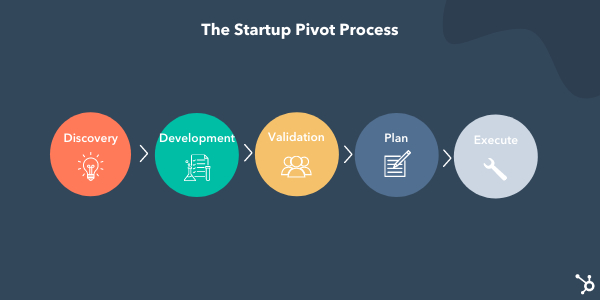
How to Pivot Your Business
one. Focus on what works.
2. Inform and involve stakeholders.
three. Human activity quickly and decisively.
four. Skill upward if you lot need to.
5. Get comfy with change and cover it.
To Pivot, or Not to Pin


Originally published Jan 20, 2022 8:00:00 AM, updated January 20 2022
Source: https://blog.hubspot.com/sales/pivot-startup
0 Response to "what does it mean to pivot in business"
Post a Comment